


Showcase Major Contents
-
How Do cashierless Stores Work?
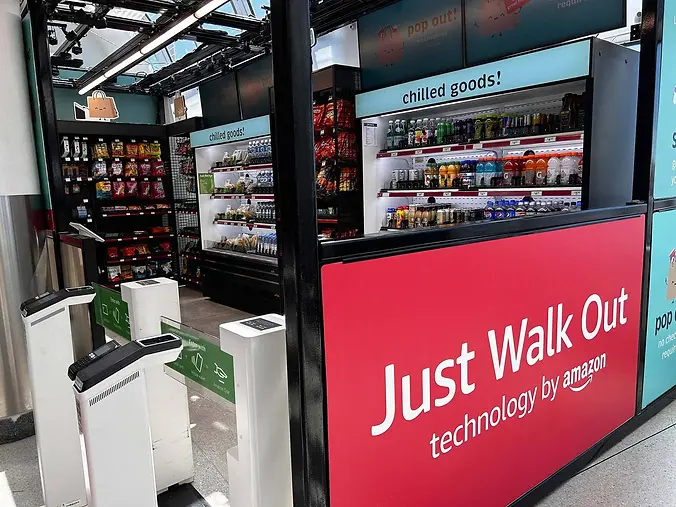
Customers enter via QR code or biometric scan, assigning a unique ID. Cameras and sensors monitor interactions, updating virtual carts. Exit initiates automatic payment. Edge computing ensures low latency, with fusion techniques achieving <1% error rates.
Additional data: Systems handle up to 500 items per session, with real-time inventory updates reducing stockouts by 20-30% in deployed stores.

Key Technologies Used
Technologies encompass RFID for tagging, computer vision for recognition, and sensor fusion for accuracy. IoT facilitates data integration, AI manages scenarios like group shopping.
RFID offers batch processing; CV provides real-time analysis. Fusion combines visual and weight data, enhancing reliability. Market adoption: Over 1,000 stores globally by 2025, driven by tech maturity.
Comparative Analysis: Cashierless Vs. Traditional Stores
Cashierless stores provide faster checkouts (seconds vs. minutes), reduced labor costs (30% savings), but higher initial investments. User experience emphasizes convenience, though privacy issues persist.
Data comparison: Traditional stores face 15% higher operational costs due to staffing; cashierless models achieve 25% better efficiency in high-traffic areas.

Limitations
Limitations include deployment costs (millions per store), technical failures in varying conditions, privacy concerns from surveillance, and barriers for non-digital users.
Ethical challenges: Potential job losses (estimated 10-20% in retail sector by 2030) and data breaches. Solutions involve hybrid models and robust encryption.
The Furure of cashierless stores and ethical Considerations
Future trends feature predictive analytics for pricing, hybrid manned/unmanned operations, and blockchain payments. Market forecast: Growth to USD 202.65 billion by 2034 at CAGR 25.2%. Another projection: USD 10.95 billion by 2033 at 39.69% CAGR.
Ethics: Prioritize data minimization, consent, and GDPR/PIPL compliance to build trust.